Who Told Me to Like This? Algorithmic Taste and the New Media Rebellion
And how to discuss this in the classroom

The Strange Echo of Enthusiasm
I knew The Materialist was being marketed to me before I even saw a trailer. One by one, the podcasts that punctuate my commute—each with its own vibe and politics—started gushing about the film. The praise never felt scripted, yet the phrasing was uncannily consistent: “smart satire,” “can’t-miss commentary on consumer culture,” “mind-bending third act.” Four hosts reading from the same invisible brief. All with a similarly vague sponsorship disclosure: “This episode may feature content that has been externally sponsored or internally incentivized.” Obviously done so the disclosure was there but what was being sponsored was up for interpretation. One thing was clear to me though…My feed had become a synchronized chorus.
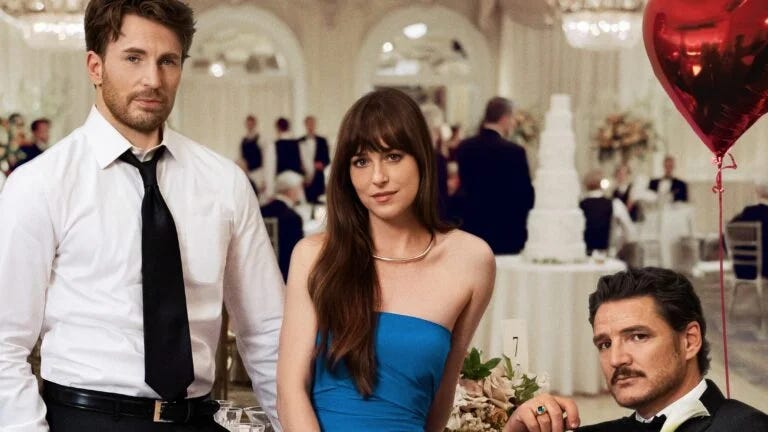
Influencer marketing has always relied on trust, but today’s campaigns are engineered for total saturation. Studios buy share of voice—not just ads, but talking heads, TikTok skits, pop-culture newsletters, pre-release “critic” tweets. The goal is to replace serendipitous buzz with manufactured inevitability: of course you’ll watch The Materialist; everyone agrees it’s great.
Enter the Algorithmic Rebuttal
Yet almost as quickly, a countercurrent has formed. Instagram critiques say the movie supports “the broke man propaganda.”
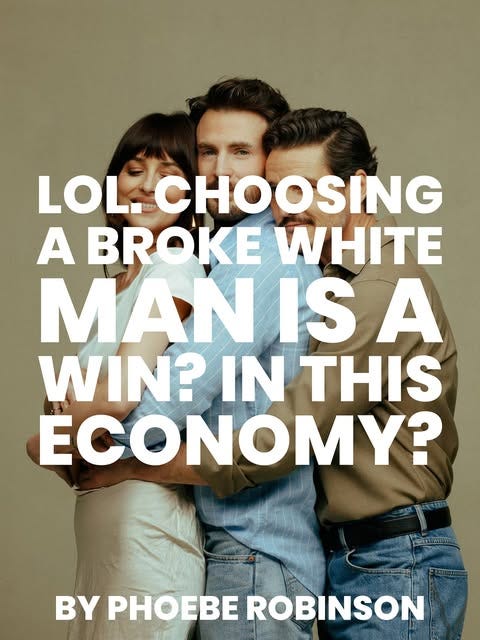
TikTok critics remark the movie as “a flop.” Longform Substack essays dissected plot holes with surgical precision. Instead of a consensus, the internet produced a whiplash oscillation—5-star raves versus visceral takedowns.
And this is the kind of critique I love to see. Something that goes against the echo chamber of enthusiasm and asks deeper, more critical questions. To me, these critiques are not just reactions, but a form of digital protest. When influencers flood our feeds with glowing praise that mirrors each other word for word, it’s easy to feel like our own thoughts don’t matter. That’s why so many people flock to the comments, stitch videos, or post takedowns: it’s not just to be contrary—it’s to be real. To say, “I see through this,” or “this didn’t speak to me,” or “stop pretending this is organic.” These are moments of resistance in a culture that increasingly asks us to perform enthusiasm on cue. And while, yes, that backlash still keeps the movie in the spotlight, it also carves out space for people to express their values, their standards, and their desire for authenticity—on their own terms.
Critique can be a form of collective immune response. Our digital antibodies are being alerted to hidden persuasion. When TikTok creators reverse-engineer sponsorship disclosures or when podcasters openly compare talking points, they perform media literacy in real time. The question is whether this resistance scales beyond performative negation. Does yelling “ad!” actually inoculate us, or does it just feed the content mill with another monetizable posture?
True critical agency would mean holding several thoughts at once: yes, influencers are paid; yes, algorithms amplify dissent; and yes, a film can be enjoyable even under those conditions. It would mean carving out space for first-hand experience—watching The Materialist (or not) on our own terms, then reflecting before broadcasting hot takes.
Toward a Pedagogy of Algorithmic Taste
This tension—between manipulated consensus and contrarianism—is fertile ground for classroom exploration. Media literacy often stops at decoding advertising techniques; today we must also interrogate platform logics that shape not only what messages reach us but how swiftly counter-messages appear. Teaching students to map the feedback loops of hype and backlash equips them to notice when their adoration (or sometimes contrarianism) is being instrumented.
Turning the Think Piece into a Classroom Lesson (College Writing or Media Studies, 1–2 class periods)
1. Warm-Up (15 min)
Show a montage: 3 influencer clips praising The Materialist, followed by 3 viral negative reactions. Quick write: “What do these voices want from you?” Surfaces gut reactions and primes discussion about persuasion.
2. Mini-Lecture & Discussion (20 min)
Briefly define: influencer marketing, algorithmic amplification, and backlash culture. Use real data.
3. Evidence Hunt (30 min)
In small groups, students track one talking point across platforms (podcast, Instagram, Reddit) and document similarities/differences. Practices source comparison and pattern recognition (i.e. recognizing that 5 different podcasts have talked about The Materialist within the same week and have similar praise).
4. Reflection & Position Draft (20 min)
Individually, students draft a 200-word micro-review of The Materialist imagining they have not seen it. Student then annotate which parts are influenced by external narratives. Highlights how pre-exposure frames expectation.
5. Homework / Extension
Watch the film (or selected scenes) and revise the review after viewing. Add a meta-paragraph: “What changed after firsthand experience?” Reinforces distinction between mediated expectation and personal judgment.
6. Assessment
Short essay or discussion post analyzing the “purpose” of advertising The Materialist. Student can also answer whether online backlash functions as meaningful resistance or just another commodified cycle. Checks critical synthesis & application.
Optional Tech Tie-In: Use a tool like Padlet to visualize engagement spikes for positive vs. negative keywords around release week. Students can plot correlations between marketing pushes and backlash peaks.
Closing Thought
Advertising will keep hiding in plain sight, and the antidote isn’t abstinence from media but deliberate pauses. Where are the moments where we notice the choreography and ask, “Who benefits from my reaction?” Teaching those pauses, whether through college writing prompts or K-12 media classes, might be our best shot at cultivating viewers who can love—or hate—a movie on their own terms.
excellent piece as always
But, Sydney, have you seen The Materialists yet and is it any good?!
If you want a recommendation entirely without prejudice, The Ballad of Wallis Island is one of the most beautiful films I’ve seen for a long time.